


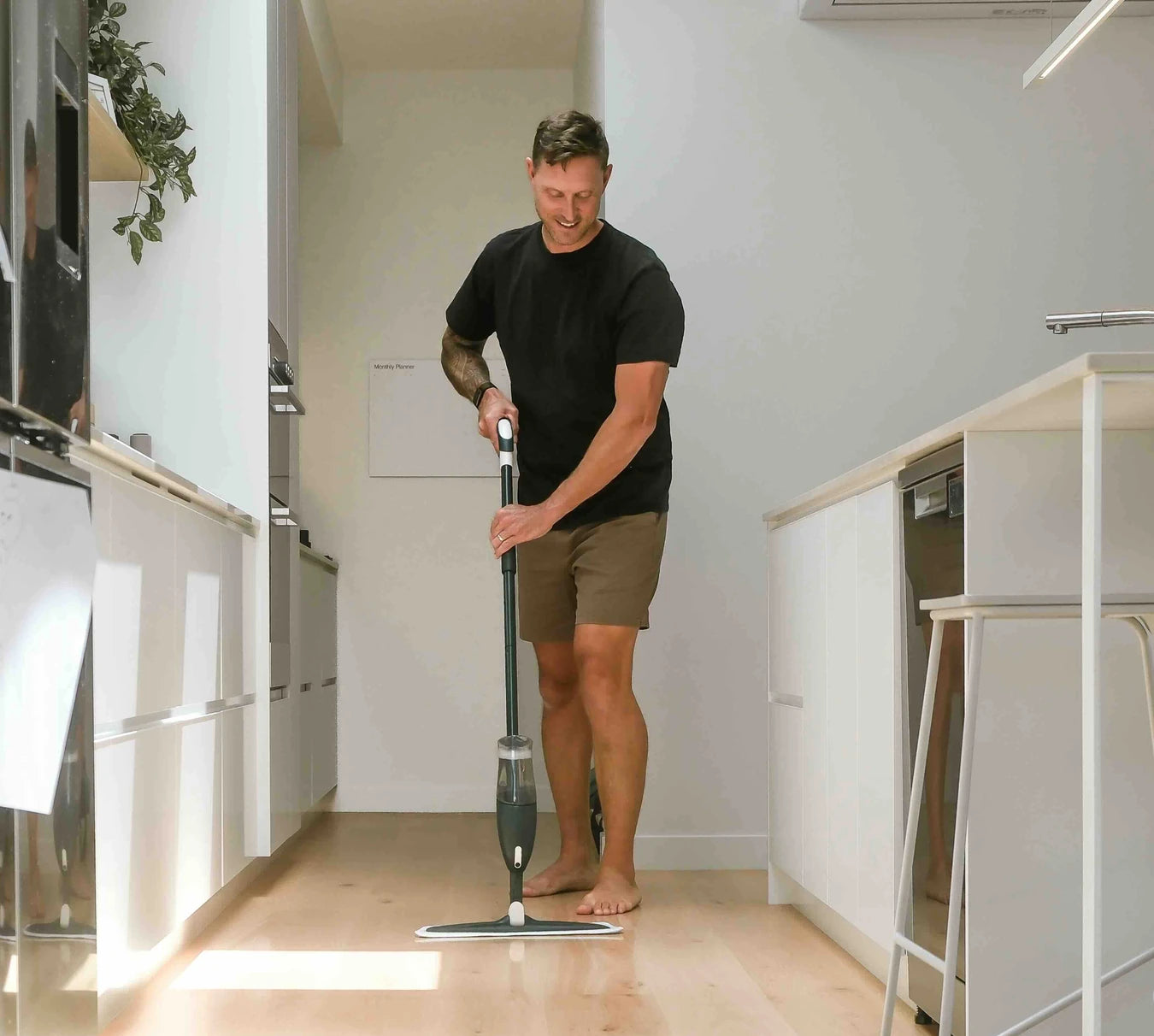

 Everyday Floor Cleaning Starter Kit · $149.00
 Everyday Floor Cleaner Concentrate · $49.00
 Everyday Spray Mop · $94.00
 Replacement Mop Heads · $19.00

What to Look for in a Spray Mop Head Replacement
Aug 17, 2026
If your floors still look dirty after mopping, the problem might not be your technique. It could be your mop head. Over time, spray mop heads wear out, lose their scrubbing power, and can even spread bacteria around your floors instead of cleaning them. Not exactly what you signed up for, right?
The good news is that replacing a spray mop head is simple and affordable. The tricky part is knowing what to look for when shopping for a new one. With so many options out there, it is easy to grab the wrong size, material, or style and end up frustrated all over again.
That is where this guide comes in. Whether you are a first-time buyer or just tired of buying replacements that do not work well, this list will walk you through the most important things to consider before making a purchase. From material and compatibility to washing convenience and absorbency, we have got you covered. By the end, you will feel confident choosing a spray mop head that actually gets the job done.
The Wrong Mop Head Can Actually Damage Your Floors
Here's something most people don't think about until it's too late: the mop head you grab as a replacement can actually do more harm than good. It's not just about whether it cleans well. The wrong mop head can leave streaks across your floors, trap fine grit and debris that acts like sandpaper on your finish, or hold way too much moisture against timber that really doesn't want to get wet. Cleaning experts consistently flag over-wetting as one of the most common ways people unknowingly damage hardwood floors, and a lot of that comes down to the mop head itself.
The thing is, spray mop heads are not all created equal, and they're definitely not all interchangeable. Material, texture, and how much water a pad holds onto once it's wet all make a real difference, especially on timber, engineered wood, laminate, or vinyl plank.
I get it though. You've got a worn-out mop head, the floors need doing, and you just want something that works. You're not looking for a deep dive into mop science. The good news is that you really don't need one. A few simple criteria separate a replacement that protects your floors from one that quietly damages them, and once you know what to look for, the decision gets pretty easy.
Microfibre vs. Cotton: Why Material Matters More Than You Think
If a mate asked me to explain the difference between microfibre and cotton mop heads over a coffee, here's exactly what I'd say.
Cotton is the old faithful. It's a natural fibre, smooth and looped, and it soaks up liquid like a sponge. That sounds great in theory, but that's also the problem. Cotton holds a lot of water, and when you're mopping a timber floor, water is the enemy. Too much moisture sitting on engineered timber, laminate, or vinyl plank causes swelling, warping, and in worst cases, permanent damage underneath the surface.
That's why you'll find cotton string mops everywhere in commercial settings: warehouses, hospitals, tiled commercial kitchens. Those surfaces can handle it. Your living room floor? Not so much.
Microfibre is a completely different animal. It's made from ultra-fine synthetic fibres, split into tiny wedge-shaped strands that physically grab and trap dust, dried grit, and liquid rather than just pushing it around. Research from professional cleaning operations shows microfibre traps up to 99.5% of dirt and germs, using significantly less water and fewer cleaning chemicals per clean compared to cotton. That's a big deal when you're mopping sealed timber or a floating floor system.
The other thing I love about microfibre is the dual-use factor. You can run the same head dry first to pick up fine dust and pet hair, then switch to a light spray and mop. One tool, two jobs, barely any water on the floor.
Industry comparisons between cotton and microfibre consistently show microfibre outperforming cotton on absorbency efficiency, hygiene, and suitability for modern residential hard floors. It's also why microfibre has become the standard material for spray mop replacement heads in the residential market.
Not all microfibre is equal though. Budget heads can feel fluffy but lack the fibre density to actually trap fine particles properly. Look for heads that feel substantial and hold their structure after washing.
Size and Shape: The Detail Most People Ignore
Most people spend zero time thinking about how wide their mop head actually is. I'll admit I was the same way. You just grab something that looks roughly right and get on with it. But once I started paying attention to dimensions, I couldn't unsee how much it matters.
A head that's too wide becomes a problem the moment you hit a doorway, squeeze into the laundry, or try to work around the toilet base. You're constantly stopping, repositioning, and making awkward half-strokes. Too narrow, and you're doubling the number of passes to cover the same floor area. Neither is great when you've got two kids leaving a trail through the kitchen and you just want it done.
The Corner Problem Nobody Talks About
Here's the bit that genuinely surprised me. The shape of the mop head corners changes how useful it is in the spots that matter most. A square-edged head pushed into the corner behind the toilet, or tight against a skirting board, just rides along the edge and pushes dirty water around without making proper contact. The geometry won't let it in.
A tapered or angled corner solves this without any extra effort from you. The pointed tip physically enters the wall-floor junction on the forward stroke, so the microfibre actually lifts the grime instead of herding it sideways. No handle twisting, no awkward crouching. The shape does the work.
The same logic applies around furniture legs. A wide, square head requires you to stop and reposition repeatedly, and that's exactly where streaks and missed patches build up.
Our replacement heads measure 400mm x 140mm with a tapered design, and that size isn't accidental. It suits the proportions of standard NZ residential rooms really well, covering a hallway or bathroom in a handful of clean passes without feeling unwieldy in tight spots.
One more thing most people don't expect: turn the head on its side and run it along your painted skirting boards. The microfibre is soft enough not to scuff acrylic or enamel paint, and it picks up that fine dust line that settles at floor level. It's a small thing, but genuinely useful.
Compatibility: Will It Actually Fit Your Mop?
Let's be honest, this is probably the thing that stresses people out most when buying a replacement mop head. You find something that looks right, you order it, you wait for delivery, and then it turns out the attachment doesn't match your mop frame. Nobody has time for that, especially when you've got a kitchen floor that's been waiting two days already.
So here's what you need to know before you buy.
Know Your Attachment System First
Most residential spray mops use one of three attachment methods: velcro (hook-and-loop), a pocket or sleeve system where the pad slides over the frame, or a clip mechanism. Velcro is the most common on home spray mops, based on what's widely available in the market. Flip your mop frame over and take a look. If you see strips of rough, scratchy material, that's velcro. If the frame has no strips and the pad slots over it like a pillowcase, that's a pocket sleeve system.
Check Before You Commit
Before ordering any replacement head, do three things. First, identify the brand and model of your mop handle. Second, look at the underside of your mop frame to confirm the attachment type. Third, read the product listing carefully for compatibility notes. Size claims like "fits 16-18 inch frames" tell you about width only, not whether the attachment system will actually work with your specific mop. You can read more about how different mop head attachment systems compare if you want to go deeper on the mechanics.
The Truth About "Universal" Heads
Here's the honest reality: truly universal mop heads are the exception. Most replacement heads are designed for a specific mop system or a closely related family of mops, and even the velcro repair parts you can buy are often model-specific. "Universal" is a word that gets used loosely in product listings.
That's actually why the Abstract Floor Care replacement heads are worth calling out here, in a good way. They're purpose-built for the Abstract Floor Care spray mop system, so there's zero guesswork about fit, velcro profile, or pad width. It's designed to connect properly from day one, which is exactly what you want when you just need clean floors.
Machine Washability: The Feature That Actually Saves You Money
Let's talk about something that quietly saves you real money over time, and most people overlook it completely when they're shopping for a replacement mop head.
A machine washable mop head means you're not tossing a single-use pad in the bin every time you clean your floors. Those disposable pads add up faster than you'd think, especially when you've got kids tracking mud through the house on a weekly basis. A quality reusable head, washed and ready to go again, is just a smarter way to run a household. Better for your wallet, better for the environment, and honestly less annoying to manage.
Wash It Right and It'll Last
The golden rule with microfibre is to wash at 40°C. That temperature is warm enough to properly clean and sanitise the fibres, but cool enough that it won't break down the microfibre structure over time. Push it hotter and you start degrading the material with every wash, which means a shorter lifespan and worse cleaning performance.
Here's the tip that almost nobody talks about: do not use fabric softener. This one genuinely surprises people. Fabric softener works by coating fibres with a waxy layer to make them feel soft, but that coating is exactly what kills microfibre performance. Microfibre cleans through tiny split fibres that grip dirt and moisture mechanically. Coat those fibres and you've basically turned your mop head into a smooth cloth that just pushes grime around. Skip the softener entirely.
Dryer heat is the other hidden culprit. High heat can fuse or melt the ultra-fine filaments in microfibre, reducing their surface area and cleaning ability over time. Air drying is always the best option, or tumble dry on a low or cool setting if you're in a hurry.
Treat them right and your mop heads will give you significantly more washes before needing replacement, which is exactly the kind of practical win that matters when you're busy running a household.
How Often Should You Actually Replace Your Mop Head?
Here's the honest truth: nobody in New Zealand seems to have actually answered this question properly. I've looked. The information out there is either aimed at commercial cleaners or so vague it's useless. So let me just give you a straight answer.
For a typical family home, mopped once or twice a week, a quality microfibre head should last somewhere between 3 and 6 months before you'll notice a real drop in performance. That's not a hard rule, it's a range. How long yours lasts comes down mostly to how consistently you wash it and whether you're treating the microfibre right (cool wash, no fabric softener, air dry when you can).
Signs It's Time to Let It Go
Don't wait until the head is falling apart. Watch for these:
It no longer picks up fine dust or pet hair properly
It leaves streaks on your floors instead of cleaning them
It smells after washing, even when it's fully dry
The microfibre has matted, pilled, or developed thin patches
Discolouration that just won't wash out
A worn-out head isn't just ineffective either. Research shows mop heads can harbour more than 8 million bacteria per 100 square centimetres, meaning a degraded head can spread what you're trying to clean up.
This is exactly why we sell our replacement heads in a 2-pack. Use one while the other is in the wash, rotate them regularly, and both will last significantly longer. It's a small habit that makes a real difference.
And if you want to stop thinking about it altogether, our Subscribe and Save option takes the guesswork out entirely. Set it, forget it, and you'll never be caught mopping with a head that's well past its best.
Floor-Safe Isn't Just a Buzzword — Here's What It Means for Timber
If you've got timber floors in your New Zealand home, you've probably seen the words "floor-safe" on a cleaning product and wondered whether it actually means anything. It does, and it matters more here than in most places.
New Zealand homes are genuinely unique in their flooring mix. A lot of us are walking on engineered timber, or solid native species like rimu, matai, or macrocarpa. These aren't generic floorboards you'd find anywhere in the world. Native NZ timbers are hygroscopic, meaning they absorb and release moisture as humidity shifts. And if you've ever compared an Auckland summer to a Canterbury winter or a West Coast winter, you know our humidity doesn't exactly stay consistent. That variability is exactly why the mop head you use isn't a trivial choice.
So what actually makes a mop head safe for timber? Three things matter most. First, the fibre needs to be non-abrasive microfibre, the kind that lifts and traps dirt rather than dragging grit across a sealed surface. Second, it needs low lint, because loose fibres carry particles that scratch the seal coat on repeat passes. Third, and this is the big one for solid timber, it needs controlled moisture release. A rough, high-pile, or overly saturated mop head pushes water into the micro-gaps at board edges where the seal is thinnest. Over time, that causes cupping, swelling, and in engineered boards, delamination. That's not recoverable damage.
Here's the practical upside though. A mop head gentle enough to protect sealed rimu is, by definition, safe on laminate, vinyl plank, tiles, and sealed concrete too. In an open-plan NZ home where timber runs into a tiled kitchen and a vinyl plank bathroom, one head genuinely does the whole house.
Real NZ buyers have confirmed this in practice. The Abstract Floor Care Everyday Spray Mop holds a perfect 5-star rating from verified NZ customers. Adam noted it "keeps our timber floors looking like new," and Andrew confirmed it works across "all our wood flooring and tiles." That kind of feedback from people using it on actual NZ floors, in actual NZ conditions, carries more weight than any product specification ever could.
A Quick Note on Buying Mop Heads in New Zealand
If you've spent any time searching for spray mop heads online, you've probably noticed that most of the reviews and "best of" guides are written for an overseas audience. The products they recommend are from brands that either don't ship to New Zealand, have no local stockist, or sell the mop here but not the replacement heads. It's genuinely frustrating, and it's one of the reasons so many Kiwi households end up running worn-out mop heads for way too long.
The NZ market is smaller, which means fewer options. But it also means the options that do exist need to work harder for our specific conditions. New Zealand homes, particularly anything built before the 1970s, have a high proportion of native timber floors: rimu, kauri, matai. These are softer and more moisture-sensitive than the hardwood floors most overseas guides are written around. Add in our climate swings, humid North Island summers and cold dry winters, and you've got floors that genuinely need a more considered approach than a generic overseas recommendation is going to give you.
There's also a newer trend worth being aware of. Flooring retailers and commercial cleaning suppliers are increasingly stocking mop head accessories, but many of those products are designed for industrial environments, sealed concrete, commercial vinyl, heavy-use tile. Using them on a rimu or matai floor at home is a different story entirely.
That's exactly why we built Abstract Floor Care as a complete system from the ground up, here in New Zealand. The spray mop, the concentrated cleaner made right here in NZ, and the replacement heads were all developed together with home timber floor care at the centre. Nothing was sourced separately and bundled. And for busy households who don't want to think about reordering, our Subscribe & Save option gives you 15% off and keeps fresh heads arriving before you even realise you need them.
The Bottom Line on Spray Mop Head Replacements
Here's the quick summary if you want to bookmark it:
Go microfibre over cotton for spray mops on hard floors
Check compatibility first before you buy anything
Wash at 40°C, skip the fabric softener
Replace every 3 to 6 months depending on how hard it's working
Match the head to your floor type, especially if you've got timber
The bigger point though? When your replacement head is designed for your specific mop, and you're pairing it with a cleaner that's actually safe for your floors, you remove all the guesswork. No more wondering if that chemical is too harsh for engineered timber, or whether your mop head is leaving a film behind. It just works.
If you're ready to sort it out, our replacement mop heads are designed specifically for the Abstract Floor Care spray mop system, machine washable, and come as a 2-pack for NZ$19. You can also subscribe and save 15% if you want them showing up automatically every few months.
Honestly, once you've got the right setup, clean floors stop being a chore. That's the win.
Conclusion
Choosing the right spray mop head replacement does not have to be overwhelming. Keep these key points in mind: match the replacement to your mop's compatibility specs, prioritize absorbent and floor-friendly materials, look for options that are easy to wash and reuse, and consider scrubbing power based on your floor type.
The right mop head makes a real difference. It saves you time, protects your floors, and gives you the clean results you actually expect from mopping.
Now it is time to put this knowledge to work. Take a look at your current mop head and honestly assess whether it is still doing its job. If it is not, use this guide to find a replacement that fits your needs. A cleaner home is just one good purchase away.